
Select Country or Region

global

English

Blog Center

Blog Details

Should a Worn Pump Casing Be Repaired or Replaced?

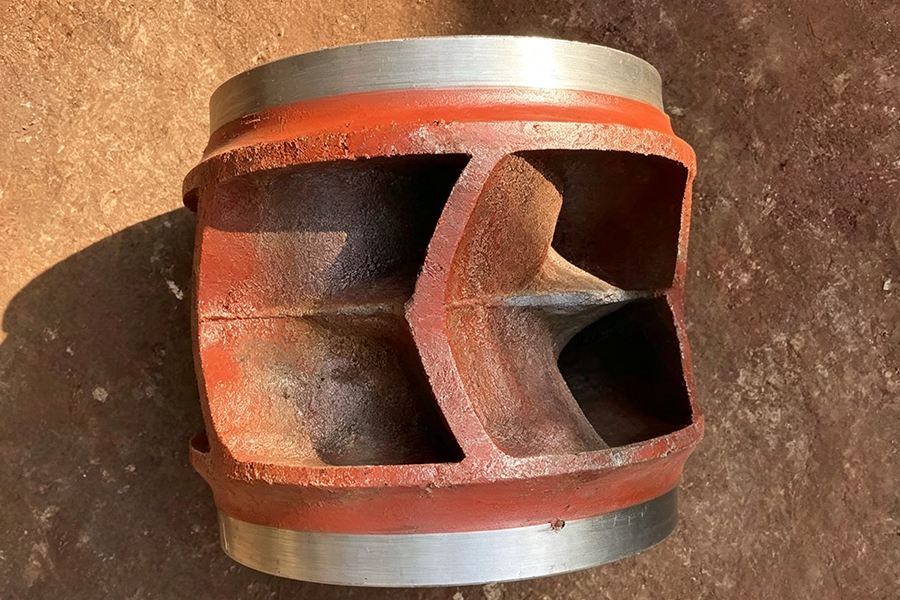
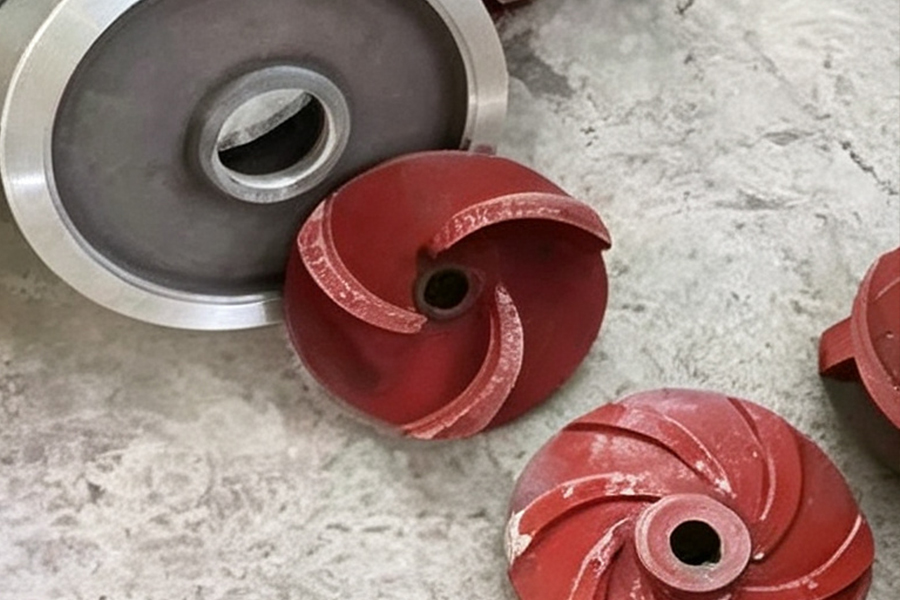
When a pump casing handles slurry containing particles over an extended period, localized thinning, grooving, erosion, corrosion, cracks, or wear on sealing surfaces may occur. Once wear is detected on the pump casing, the location and extent of the damage should first be evaluated before deciding whether to repair or replace it.

During inspection, focus should be placed on: erosion and thinning of the pump casing's inner wall; localized wear on the volute or flow passages; suction and discharge ports; areas in contact with wear plates, liners, or seals; bolt holes and mounting surfaces; sealing surfaces; whether cracks, deformation, or leaks exist; and whether the wall thickness still meets operational requirements.

Whether minor localized wear can be repaired must be determined based on the pump casing material, pressure-bearing conditions, damage location, and repair process. When cracks, severe thinning, structural deformation, or damage to critical mating surfaces are involved, simple repairs may not restore the original structural integrity and safety conditions.

If a decision is made to replace the pump casing, the following should be verified: pump model and pump casing part/drawing number; inlet and outlet dimensions and orientation; mounting hole locations; fit with the impeller; fit with wear plates, liners, and seals; pump shaft centerline position; direction of rotation; and material requirements.

Do not judge whether a new and old pump casing are directly interchangeable based solely on external similarity. Critical dimensions, mating surfaces, and internal clearances must be confirmed before official installation.

RUBBER Series
Related Products
Company FAQs
FAQ
Here, we answer your frequently asked questions about customization, material selection, and purchasing industrial rubber and wear-resistant components.
Contact Us
How to request a quote for pump parts from Senchuan?
Please provide the part name, OEM model, part number, mounting dimensions, medium parameters, quantity, photos or drawings, and delivery destination.
How to select wear-resistant materials for impellers and casings?
Selection must comprehensively assess particle size, hardness, solid content, flow velocity, temperature, and corrosiveness, rather than relying solely on the pump model name.
Can materials for impellers and casings be customized?
Suitable material solutions can be evaluated based on medium concentration, particle size, wear severity, temperature, and corrosiveness.
Can replacement parts be produced based on samples?
Yes. Impellers and casings can be structurally and dimensionally evaluated using physical samples, drawings, or dimension data, and produced upon confirmation.
How to confirm the model of impellers and casings?
Please provide the original brand, pump type, model, part number, drawings, dimensions, photos, and medium details for technical verification.
Can impellers or casings be purchased separately?
Yes. Customers can purchase impellers, casings, or matching parts separately based on maintenance and replacement needs.
Which industrial pumps are impellers and casings suitable for?
Mainly suitable for slurry pumps, gravel pumps, dredge pumps, submersible slurry pumps, froth pumps, and other slurry handling equipment.
What products are included in the pump parts series?
The series mainly includes impellers and casings, with liner plates, shaft sleeves, seals, and other wear-resistant parts evaluated and supplied based on pump models.

Ready to upgrade your
pumping system?

Global Inquiry Hotline

+86 19933037056

Official Email

info@cnminerals.com

Company Address

Block C, MCC Shengshi Plaza, No. 66 Xiangtai Road, Yuhua District, Shijiazhuang City, Hebei Province

Get Free Custom Solution

*
*
File Upload Upload your drawings for a real-time quote