


Select Country or Region

global

English

Blog Center

Blog Details

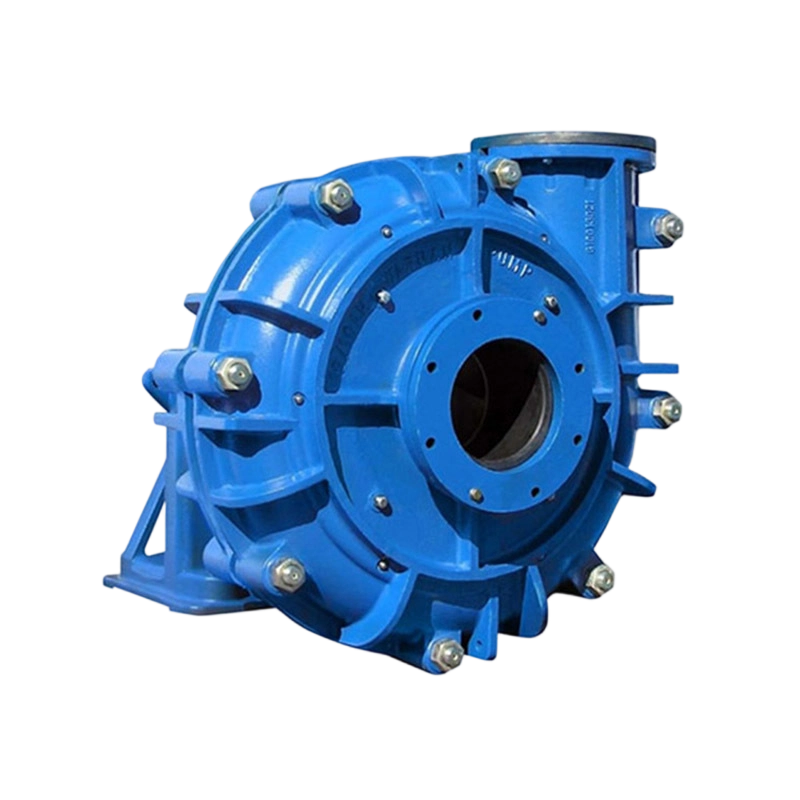
What Are the Features of CAHR Rubber Centrifugal Pumps? How to Select the Right Model?

CAHR rubber centrifugal pumps generate centrifugal force through impeller rotation to transport mineral slurries, tailings, fine particle slurries, or other industrial slurries to target destinations.

Rubber wet ends provide protection within a certain range of abrasive and corrosive conditions, allowing for inspection and replacement after wear. Their actual suitability must be evaluated based on particle characteristics, temperature, medium composition, and operating speed.

When selecting a CAHR rubber centrifugal pump, key factors to confirm include: normal and maximum flow rates; required head; medium density and solids concentration; maximum particle size; particle shape and hardness; medium temperature; pH value and corrosiveness; pipeline length and diameter; voltage, frequency, and motor requirements; and daily operating hours.

The actual operating point of the pump is determined jointly by the pump performance curve and the piping system. Operating outside the optimal working range for prolonged periods may lead to insufficient flow, vibration, increased energy consumption, or uneven wear on wet ends.

Rubber centrifugal pumps are not necessarily suitable for all large-particle, high-temperature, or high-impact media. If the medium contains large, sharp particles or if the temperature exceeds the allowable range of the rubber material, metal wet ends or alternative pump types should be re-evaluated.

Company FAQs
FAQ
Here, we answer your frequently asked questions about customization, material selection, and purchasing industrial rubber and wear-resistant components.
Contact Us
What are common spare parts for rubber slurry pumps?
Common spare parts include impellers, rubber liners, casings, liner plates, shaft sleeves, seal assemblies, and bearing assemblies. Replacements should be verified by pump model, part number, or drawing.
Can rubber slurry pumps be customized?
Yes. They can be configured or customized based on flow rate, head, rubber lining, sealing type, drive setup, nozzle orientation, and installation site conditions.
What are the differences between CLR, CMR, CMCR, CSPR, and CAHR?
Different models address specific installation types and working conditions: CLR, CMR: for light-abrasion slurries. CMCR: for duties such as mill underflow. CSPR: for submerged or sump applications. CAHR: for rubber-lined centrifugal pumping duties.
How to select the right rubber slurry pump?
Pump selection requires flow rate, head, slurry type, solids concentration, particle size, slurry density, temperature, pH, suction conditions, and operating duration.
What is the purpose of a rubber lining?
Rubber linings reduce wear and corrosion on the pump casing and wet ends. They are ideal for fine-particle, moderate-temperature slurries. Specific materials and configurations depend on slurry concentration, particle size, temperature, and corrosiveness.
What applications are rubber slurry pumps used for?
Rubber slurry pumps primarily transport solid-bearing slurries, tailings, and mortars in mining, mineral processing, grinding, tailings disposal, and industrial conveyance.

Ready to upgrade your
pumping system?

Global Inquiry Hotline

+86 19933037056

Official Email

info@cnminerals.com

Company Address

Block C, MCC Shengshi Plaza, No. 66 Xiangtai Road, Yuhua District, Shijiazhuang City, Hebei Province

Get Free Custom Solution

*
*
File Upload Upload your drawings for a real-time quote